
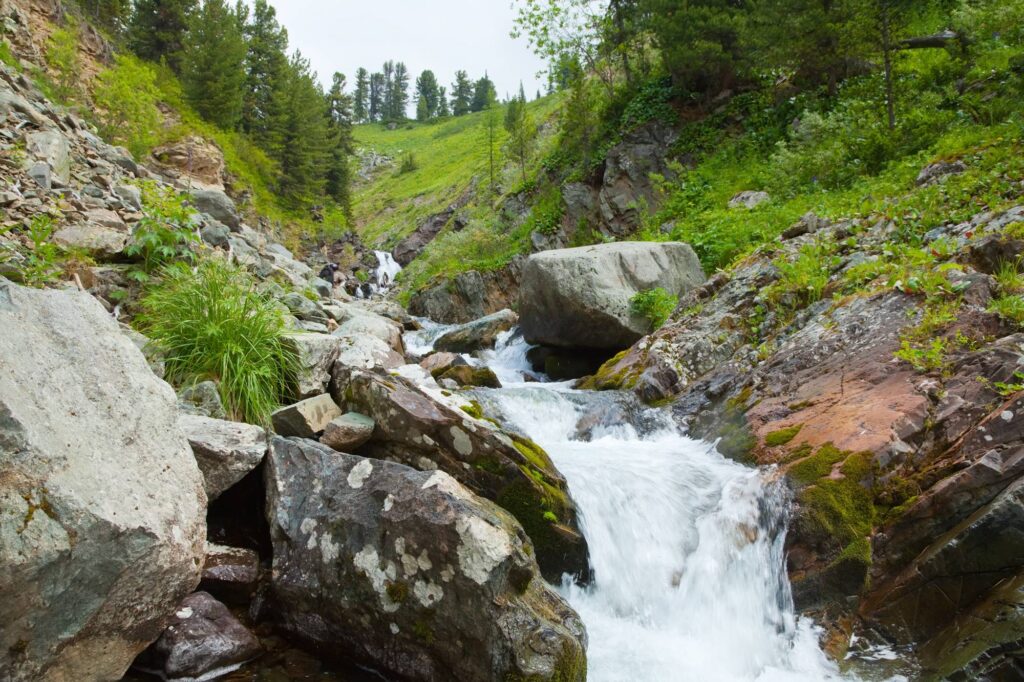
Ireland’s mountains, rivers and famously changeable weather combine to create an extraordinary collection of waterfalls.
Some plunge dramatically from high mountain cliffs, while others tumble through ancient woodland, rocky gorges and peaceful valleys. Several can be reached after a gentle walk, while others require sturdy footwear and a more adventurous hike.
Water levels often change depending on recent rainfall, meaning the same waterfall can look completely different from one visit to the next.
From famous attractions near Dublin and Killarney to hidden cascades in Donegal and the Glens of Antrim, here are 15 of the best waterfalls to visit in Ireland.
1. Powerscourt Waterfall, County Wicklow
Powerscourt Waterfall is one of Ireland’s most famous natural attractions.
The Powerscourt Estate describes the waterfall as Ireland’s highest, with water cascading approximately 121 metres down a rocky mountainside. It is surrounded by beautiful woodland at the foothills of the Wicklow Mountains.
The waterfall is easily accessible from the visitor parking area, making it suitable for families and visitors who do not want to complete a long hike. Picnic areas and open spaces allow plenty of time to relax and enjoy the surroundings.
Powerscourt Waterfall can be combined with Powerscourt House and Gardens, Glendalough and the Wicklow Mountains during a private day trip from Dublin.
2. Torc Waterfall, County Kerry
Torc Waterfall is located inside Killarney National Park, approximately seven kilometres from Killarney town.
The 20-metre cascade is formed as the Owengarriff River flows down from Torc Mountain towards Muckross Lake. A short woodland walk leads from the parking area to the base of the waterfall.
Visitors who want a longer walk can continue up the stone steps beside the falls or connect with several trails through the national park.
Torc is a natural stop on the Ring of Kerry and can easily be combined with Muckross House, Ladies View, Moll’s Gap and the Lakes of Killarney.
3. Glencar Waterfall, County Leitrim
Glencar Waterfall is situated in a beautiful wooded valley close to Glencar Lake.
The 15-metre waterfall is reached by a short path from the visitor area. Its peaceful woodland setting and graceful flow have made it one of Ireland’s most romantic natural landmarks.
Glencar is closely associated with poet W.B. Yeats and helped inspire imagery within his famous poem The Stolen Child.
Facilities in the area include parking, picnic spaces, toilets, a playground and a tearoom. This makes Glencar an enjoyable stop for families as well as visitors exploring counties Leitrim and Sligo.
4. Aasleagh Falls, County Mayo
Aasleagh Falls is a picturesque group of waterfalls on the River Erriff near the Galway and Mayo border.
The falls are located shortly before the river reaches Killary Harbour, Ireland’s best-known fjord. Visitors can enjoy views from near Aasleagh Falls Bridge or follow the riverside paths through the surrounding countryside.
The area is particularly impressive after rainfall, when a greater volume of water rushes across the rocky riverbed.
Aasleagh Falls fits naturally into a journey between Connemara and Westport and can be combined with Kylemore Abbey, Leenane, Killary Harbour and the scenic Doolough Valley.
5. Assaranca Waterfall, County Donegal
Assaranca Waterfall is one of Donegal’s most accessible natural attractions.
The waterfall is located beside the road leading from Ardara towards Maghera Beach and Caves. Water tumbles down the dark rock face into a pool surrounded by lush green vegetation.
Because the waterfall can be viewed close to the roadside, it is an excellent choice for visitors who want to experience Donegal’s natural scenery without completing a long walk.
Continue onwards to Maghera Beach, explore Ardara or drive through the magnificent Glengesh Pass to create an unforgettable day in southwest Donegal.
6. Glenevin Waterfall, County Donegal
Glenevin Waterfall is located in the peaceful Glenevin Valley near Clonmany on the Inishowen Peninsula.
Fresh mountain water drops approximately 30 feet over a dark rock face. A well-marked walking route follows the stream towards the waterfall, crossing small bridges along the way.
Picnic areas and fairy doors hidden among the trees make this an especially enjoyable stop for families with younger children.
Glenevin can be combined with Ballyliffin, Fort Dunree, Mamore Gap and Malin Head during a tour of the beautiful Inishowen Peninsula.
7. Mahon Falls, County Waterford
Mahon Falls is situated in the Comeragh Mountains in County Waterford.
The River Mahon plunges approximately 80 metres over sandstone cliffs on the southern slopes of the mountains. A walking route leads from the parking area through the open valley towards the base of the falls.
The surrounding mountain scenery is as impressive as the waterfall itself, with views extending back towards Dungarvan and the Waterford coastline.
Mahon Falls can be combined with the Waterford Greenway, the Copper Coast, Coumshingaun Lake or the seaside town of Dungarvan.
8. Gleninchaquin Waterfall, County Kerry
Gleninchaquin Park is hidden within a narrow glacial valley on the Beara Peninsula.
Its spectacular waterfall descends approximately 140 metres from the mountains above and feeds a series of lakes throughout the valley. Height claims for Irish waterfalls can vary depending on whether cascades are continuous, multi-stage or seasonal, but Gleninchaquin is unquestionably one of the island’s most impressive.
Several marked walking trails lead through woodlands, across streams and towards elevated viewpoints. The privately operated park also provides parking and picnic facilities.
The waterfall can be combined with Kenmare, Healy Pass, Uragh Stone Circle and a wider exploration of the Beara Peninsula.
9. The Devil’s Chimney, County Sligo
The Devil’s Chimney rises dramatically above Glencar Valley near the border between counties Sligo and Leitrim.
Known in Irish as Sruth in Aghaidh an Aird, the waterfall descends from the cliffs above the valley. Wind can sometimes push the falling water upwards or backwards, helping to explain its unusual Irish name.
The waterfall is most impressive after rainfall and may become much lighter during extended dry conditions. Reaching the best viewpoints involves an uphill walk, so appropriate footwear is recommended.
The Devil’s Chimney can be visited alongside Glencar Waterfall, Glencar Lake and the landscapes surrounding Benbulben.
10. Clare Glens, Counties Limerick and Tipperary
The Clare Glens contain a series of waterfalls and rapids rather than one single large cascade.
The Clare River flows through a wooded red sandstone gorge that forms part of the boundary between counties Limerick and Tipperary. Trails follow both sides of the river, passing footbridges, woodland and several attractive waterfalls.
Visitors can choose between a shorter nature loop and a longer walking route through the glens.
The paths can become muddy and slippery, particularly after rain, so walking boots or sturdy shoes are recommended. The combination of rushing water and dense woodland makes Clare Glens one of Ireland’s most atmospheric forest walks.
11. Glenbarrow Waterfall, County Laois
Glenbarrow Waterfall is located in the Slieve Bloom Mountains near Clonaslee.
The marked Waterfall Loop follows the River Barrow through natural woodland before reaching the impressive three-tiered Clamp Hole Waterfall.
The full loop is approximately 4.2km and includes forest trails, riverbank paths and some steeper sections. Conditions can be rough or wet underfoot, so suitable footwear is important.
Spring is a particularly beautiful time to visit, when bluebells appear throughout the woodland. Glenbarrow offers an excellent alternative for visitors looking to explore Ireland’s quieter central landscapes.
12. Glenariff Waterfalls, County Antrim
Glenariff Forest Park is known as the Queen of the Glens and contains some of Northern Ireland’s finest woodland scenery.
The park’s Waterfall Walk follows boardwalks, forest paths and steps through a deep river gorge. Several waterfalls can be viewed along the route, surrounded by ferns, moss-covered rocks and mature woodland.
Different trails are available within the park, ranging from short viewpoint walks to longer and more demanding routes.
Glenariff can be incorporated into a tour of the Glens of Antrim and the Causeway Coastal Route, with nearby stops including Cushendall, Cushendun and Ballycastle.
13. Glenoe Waterfall, County Antrim
Glenoe Waterfall is a hidden woodland attraction near the village of Glenoe in County Antrim.
The waterfall drops approximately 30 feet into a wooded glen and can be reached by a relatively short walk. Trees, stone steps and vegetation surrounding the falls create a peaceful and secluded atmosphere.
Its location makes Glenoe an easy addition to a journey between Belfast and the Causeway Coast.
Visitors can combine the waterfall with Carrickfergus Castle, the coastal village of Whitehead or the scenic roads leading towards Glenarm and the Glens of Antrim.
14. Cranny Falls, County Antrim
Cranny Falls is located close to the coastal village of Carnlough.
A woodland trail leads inland from the village towards the waterfall, providing views across the surrounding glen and coastline along the way.
The falls are quieter than many of Ireland’s better-known waterfalls and offer an enjoyable walk for visitors exploring the Causeway Coastal Route.
Carnlough itself is worth allowing time for. Its picturesque harbour, stone buildings and coastal setting make it one of the most attractive villages in the Glens of Antrim.
15. Ness Waterfall, County Londonderry
Ness Waterfall is located inside Ness Country Park near Killaloo in County Londonderry.
The 55-acre park contains approximately 30-foot-high Ness Waterfall, along with woodland, riverside paths, gorges and rapids created by the Burntollet River.
The designated waterfall route is approximately three kilometres and includes steps, bridges and steep sections. Visitors should therefore allow enough time and wear suitable footwear.
Ness Country Park also provides picnic spaces, meadows and woodland habitats, making it an excellent destination for walkers and nature lovers.
Planning Your Irish Waterfall Adventure
Ireland’s waterfalls are generally at their most dramatic after periods of rainfall. However, wetter conditions can also make surrounding paths muddy, slippery or difficult to navigate.
Wear sturdy footwear, stay on marked trails and avoid climbing wet rocks beside waterfalls. Water currents and hidden drops can be extremely dangerous, even when a pool appears calm.
Access arrangements, parking charges and opening hours may change throughout the year, particularly at privately managed attractions such as Powerscourt and Gleninchaquin Park. Check current visitor information before travelling.
Several waterfalls can be included as short scenic stops, while locations such as Glenariff, Clare Glens and Glenbarrow deserve additional time for walking.
Explore Ireland’s Natural Wonders in Comfort
A private tour makes it easy to combine Ireland’s waterfalls with mountain scenery, historic attractions, traditional villages and famous coastal routes.
At PRO Tours & Transfers Ireland, we design personalised private day trips and multi-day tours around the interests of each group. Your journey can include famous attractions such as Powerscourt and Torc Waterfall, along with quieter locations hidden throughout Ireland’s mountains and countryside.
Relax in a comfortable private vehicle while your knowledgeable driver manages the route, timing and travel arrangements.
Discover the Ireland You’ll Never Forget.